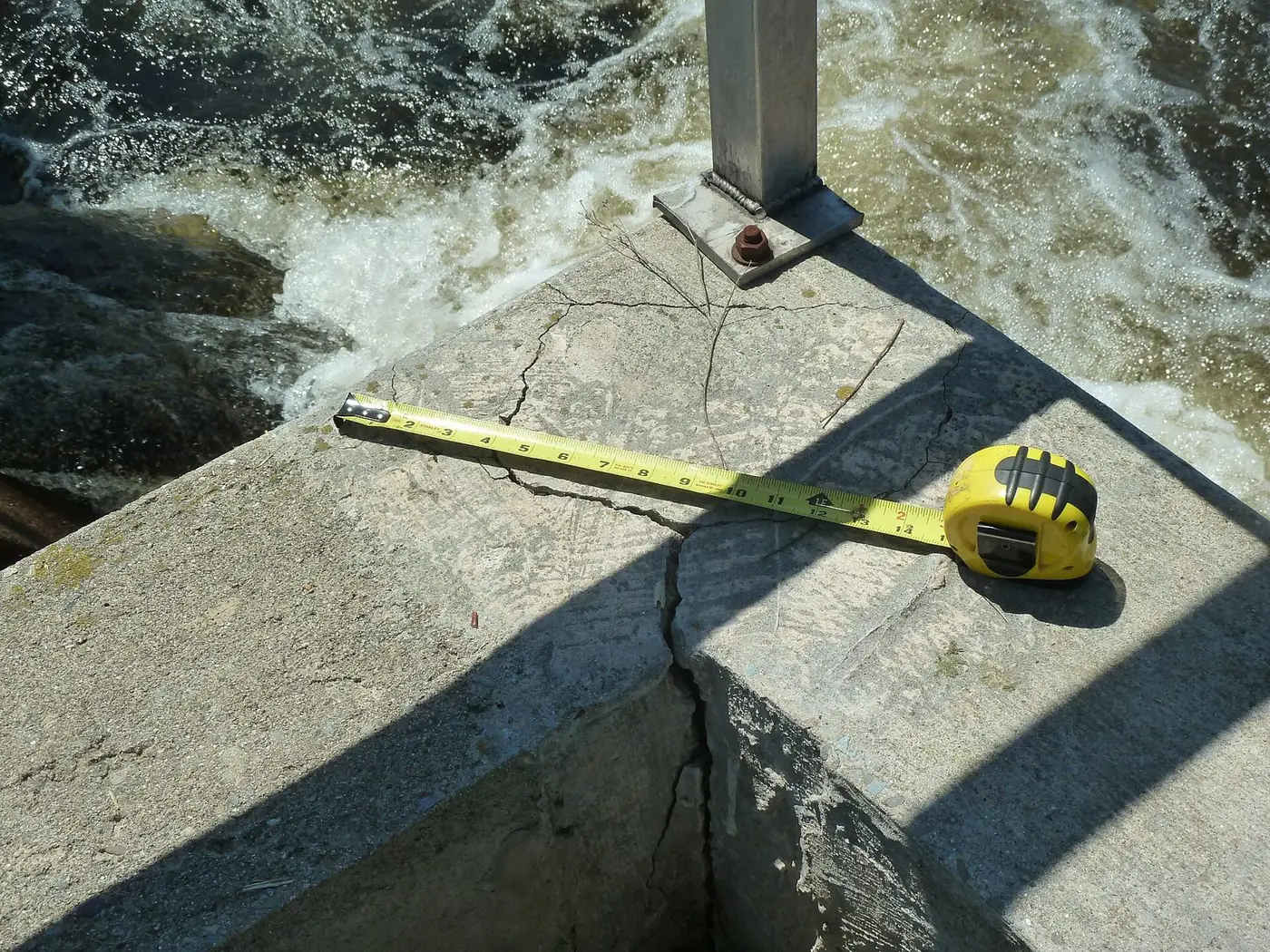
Why cracks come and go here
Coastal clay changes volume with the weather. The USDA's description of Lake Charles clay puts dry-weather cracks at half an inch to 2 inches across, open for 60 to 90 days in a typical year. When the ground under a house goes through that cycle, cracks in drywall and brick above it can widen in late summer and tighten after the rain comes back.
Worry, or watch?
The Texas Section ASCE guidelines say the majority of cracks don't compromise structural integrity, and that cracked walls, concrete and finishes are signs to investigate rather than proof of a failing foundation. Some patterns call for a closer look sooner:
- A crack that keeps getting wider from one month to the next
- Stair-step cracks in brick, together with doors that stop latching
- Brick veneer leaning away from the house. The guidelines note that veneer leaning far enough to move its weight outside the middle third of its support goes into tension and cracks.
- New cracks right after a flood or a long drought
Repair methods and prices
Epoxy injection is the ASCE guidelines' method for slab cracks roughly 1/32 inch or wider: it bonds the two sides so the slab regains its stiffness there. Where the only aim is keeping out moisture and insects, a sealant may be enough. Bob Vila lists crack repair at $250 to $800 per crack, and reinforcing a wall with a horizontal crack at upward of $4,000. Neither price includes stopping the movement that caused the crack. If the slab is still moving, sealing comes after the cause is dealt with.
After a storm
Flooding and foundation movement are separate problems that often get noticed together. If cracks appear after high water, photograph them before anything is patched, and ask whoever inspects to check drainage as well as the structure. In a floodplain, any large repair estimate can matter under Pearland's 50 percent rule. See flood zones.
A simple crack record
Mark each end of the crack with a pencil tick and the date. Photograph it from the same spot with a coin for scale. Repeat after a long dry stretch and again after heavy rain. Three or four entries spread over a season tell an inspector far more than one photo taken on the day you called.
Sources
- USDA NRCS Official Soil Series Description: Lake Charles series (revised 03/2016)
- Texas Section, American Society of Civil Engineers: Guidelines for the Evaluation and Repair of Residential Foundations, Version 3 (adopted April 1, 2022)
- Bob Vila: How much does foundation repair cost? (Katie Flannery and Evelyn Auer, updated May 29, 2024)
- City of Pearland: Substantial damage assessment letter (Engineering, 2018)
Reviewed October 7, 2026. Rules, prices and contacts change, so check the source before relying on it.
Questions and answers
How much does foundation crack repair cost in Pearland?
There's no local price list. Bob Vila's national guide puts crack repair at $250 to $800 per crack, and reinforcing a wall with a horizontal crack at upward of $4,000.
Are hairline cracks in my slab a problem?
Usually not on their own. In the Texas Section ASCE guidelines' view, the majority of cracks leave structural integrity intact. Watch for cracks that keep widening, doors that stop latching, or floors that slope.
Ready to have it looked at?
Use the form or phone us to book an inspection. You pay nothing to ask.
Out of hours, the voicemail wants your name, a number, the street address and a line about the problem.